.png)
.png)
.png)


Surface Finishing
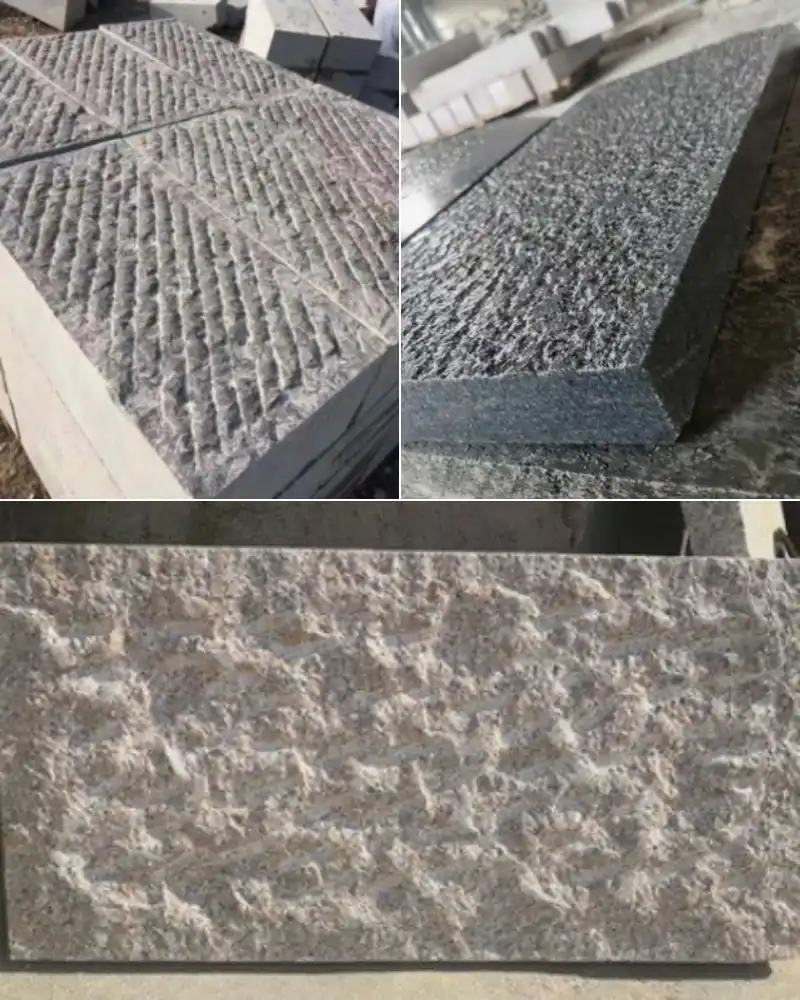
Picked
Picked stone is a surface treatment process that creates a pineapple-skin texture through manual or mechanical chiseling. It combines functionality and aesthetics, offering advantages such as strong slip resistance, high wear resistance, and a rugged, natural look. It is widely used in outdoor paving and antique-style architecture. However, its processing techniques largely require manual labor, resulting in relatively high costs.
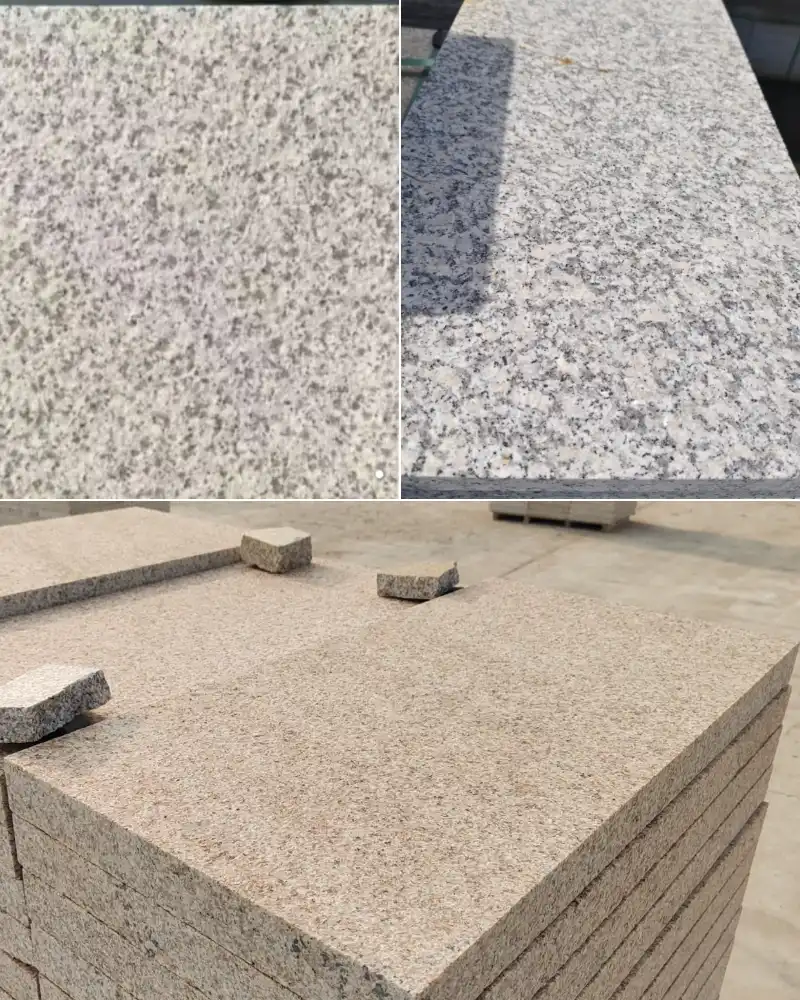
Flamed
Flamed granite is a processing technique that involves burning the surface of natural granite with a high-temperature flame, causing the minerals to crack and detach, creating a rough, slip-resistant, and rustic decorative surface. It is widely used in outdoor projects such as exterior wall cladding and plaza paving.
Main Advantages: Slip-resistant, non-reflective, highly weather-resistant, inexpensive, three-dimensional, and with good light absorption.
Application Scenarios:
Building Exterior Walls: Due to its non-reflective properties, flamed granite effectively reduces urban light pollution. Its rough texture and excellent weather resistance make it ideal for dry-hanging curtain walls of high-rise buildings.
Landscape and Municipal Paving: Flamed granite (such as sesame white and sesame black) is a preferred material for plazas, sidewalks, and park walkways. It provides good slip resistance, ensuring pedestrian safety in rainy weather, and is wear-resistant and easy to maintain.
Suitable Stones: Primarily suitable for dense, high-temperature resistant granites, such as G603, G602, G655, G682, and G654. Marble is prone to cracking at high temperatures; therefore, flamed finishing is strictly prohibited.
Thickness Requirements: To prevent cracking during high-temperature processing, flamed stone typically requires a thickness of at least 1.5cm.
Color Changes: Stone treated with flamed finish will appear whiter. In some stones (such as G682), the internal iron oxidizes after flamed finishing, causing the color to change from yellow to light red.
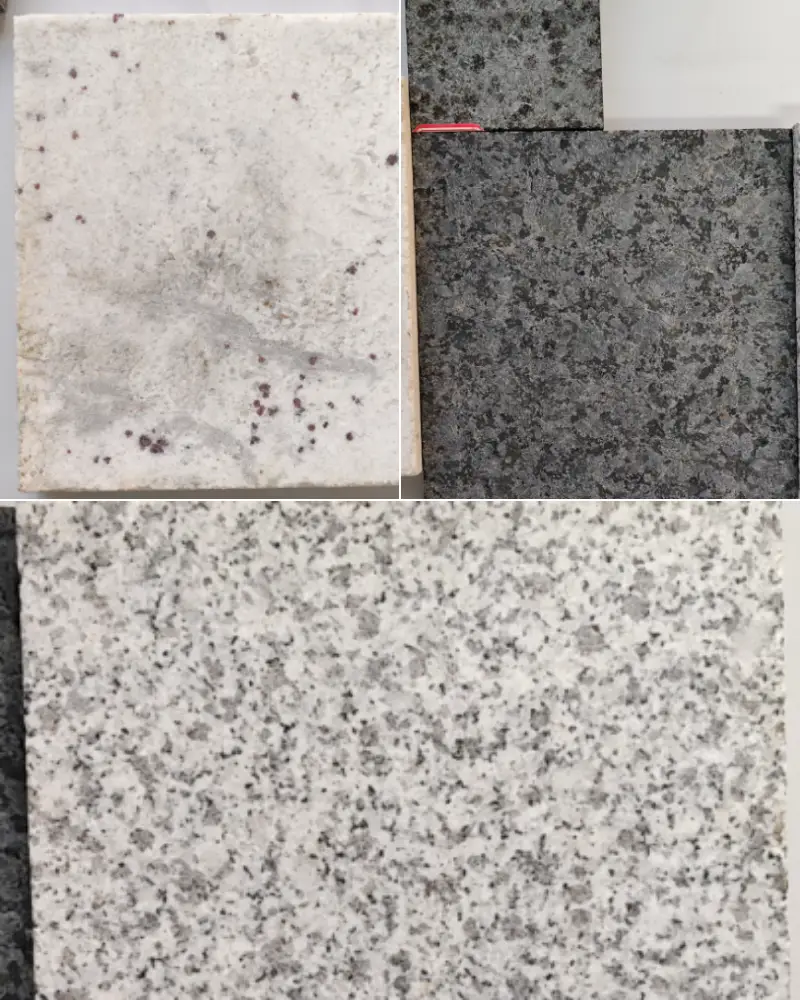
Sawn
Machine-cut stone surfaces are created by directly cutting stone with mechanical equipment, preserving the original cutting marks and exhibiting a rough texture and natural industrial aesthetic.
Machine-cut surfaces refer to surfaces formed by directly cutting stone using equipment such as circular saws, sand saws, or bridge saws. These surfaces are typically rougher, with distinct parallel cutting lines, presenting a natural and unrefined texture. They retain the textural characteristics of mechanical cutting, showcasing a rugged and rustic visual effect.
Surface characteristics: Clear tool marks or grooves, slightly rough to the touch.
Processing method: One-time shaping using large-scale stone cutting machinery.
Cost advantages: Compared to complex processes such as brushing, antique finishes, and polishing, machine-cut surfaces are simpler and less expensive.
By processing depth and style: Standard machine-cut surface: One-time cutting, smooth surface with obvious tool marks.
Machine-cut surfaces are an efficient, economical, and distinctive stone surface treatment method, suitable for architectural and landscape designs pursuing an industrial, modern minimalist, or antique aesthetic. It is not only easy to install, but also blends well into the natural environment, making it especially suitable for outdoor projects. With increasing demand for customization, more and more manufacturers are offering machine-cut products in different widths, depths, and arrangements to meet diverse design needs.
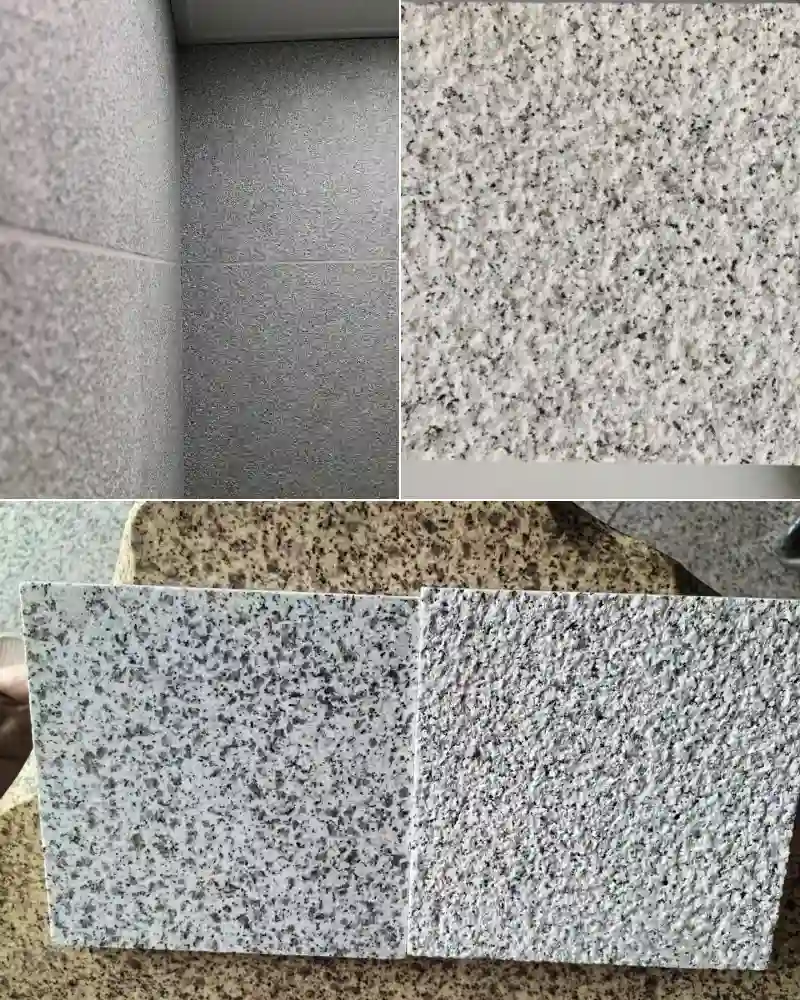
Bushhammered
Bushhammering is a rough-hewn surface treatment process that creates uniform raised granules on the stone surface through mechanical or manual hammering. It offers advantages such as slip resistance, wear resistance, and a unique appearance, and is widely used in outdoor paving and architectural decoration.
Bushhammering is a common surface treatment for natural stone, belonging to the category of “surface roughening” processes. It is primarily used to enhance the stone’s slip resistance and texture. Its name comes from the resulting surface effect—a dense pattern of raised dots resembling the skin of a lychee, visually and tactilely rough yet orderly.
This process is often applied to hard granite stones, such as G603, G655, G682,G602, and is commonly seen in plazas, sidewalks, landscaping, and exterior wall cladding.
With its excellent slip resistance, durability, and unique decorative effect, Bushhammering has become a preferred solution for municipal engineering and high-end building facades. It is particularly suitable for damp, high-traffic areas, such as park walkways, commercial plazas, and stair treads. Although cleaning is slightly more troublesome, its safety and aesthetic value far outweigh the maintenance costs.
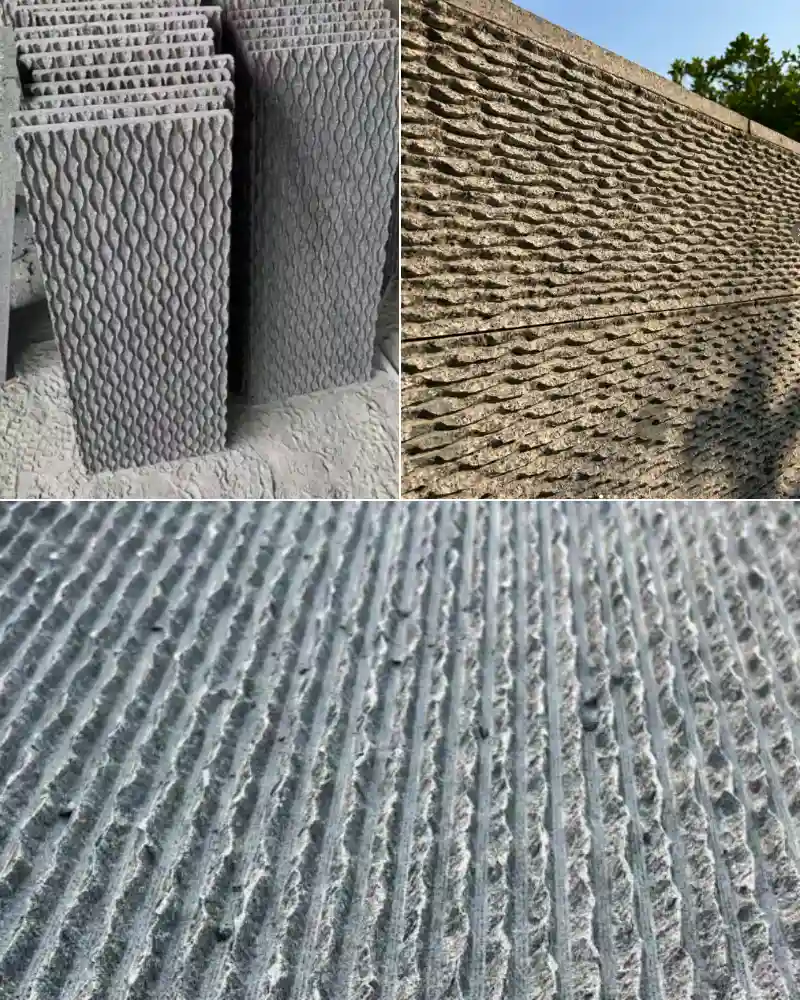
Waterflow Surface
Waterflow Surface on stone is a high-end decorative technique that uses mechanical carving to create natural, flowing water-like textures on the surface of stone, combining high aesthetics with excellent slip resistance.
In modern architecture and landscape design, the pursuit of natural and dynamic visual effects has become a mainstream trend. Waterflow Surface on stone is an innovative surface treatment technology developed in line with this concept. It mimics the ripples created by water flowing over rocks in nature, giving the originally hard and cold stone a dynamic beauty and vitality. This process is widely used in high-end hotels, villa courtyards, commercial spaces, and water features, and is one of the important means to enhance the quality of a space.
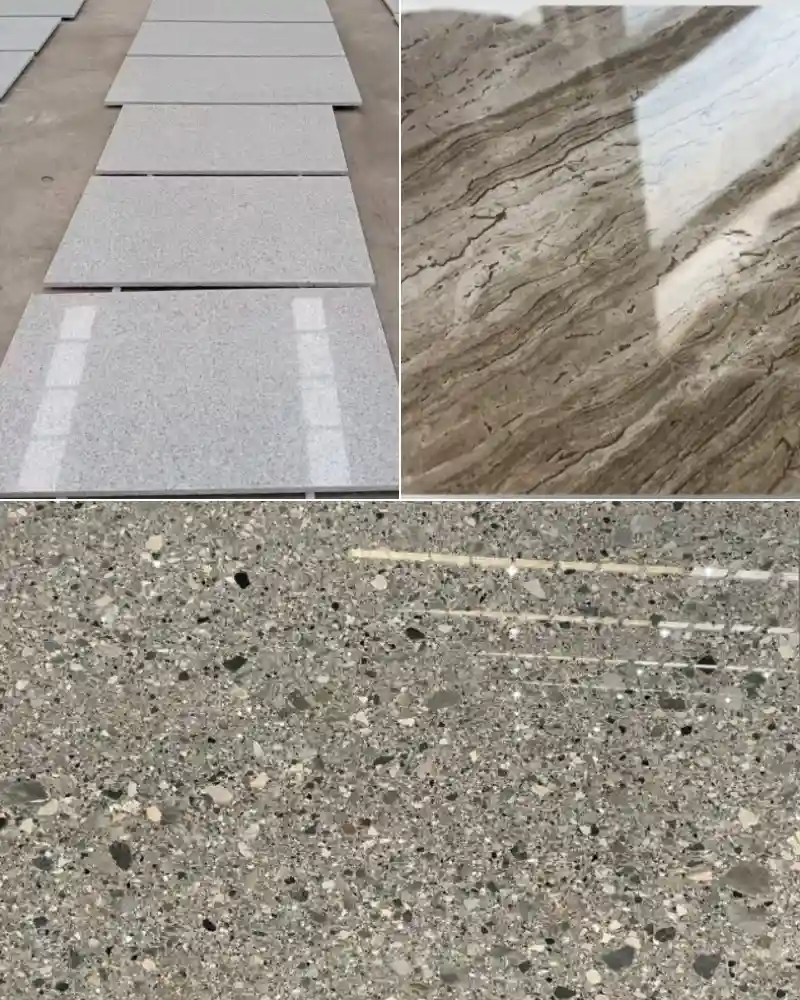
Polishing
Stone polishing is a common surface treatment technique designed to enhance the aesthetics and practicality of stone. It significantly improves the visual appeal and functionality of stone, with polished surfaces being particularly suitable for interior spaces seeking a high-end decorative look. Through mechanical grinding or chemical treatment, the stone surface can be made smooth and glossy, enhancing its decorative effect and extending its lifespan.
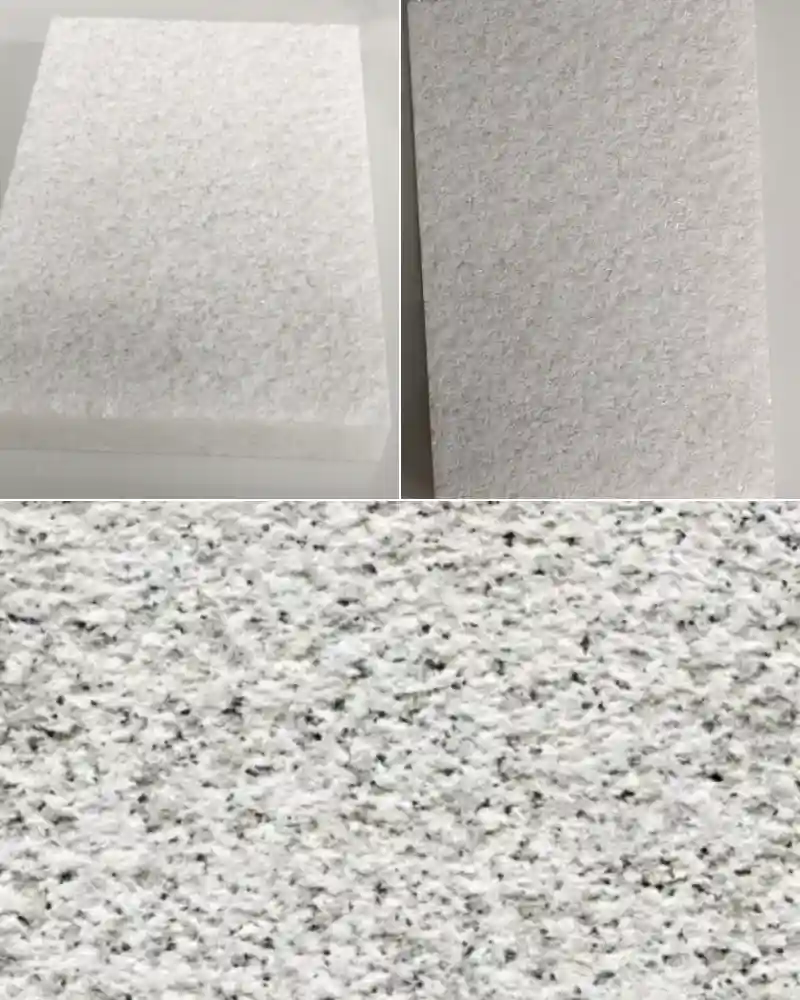
Sandblasted
Stone sandblasting is a physical processing technique that uses high-speed abrasives to impact the surface of stone, creating a matte, non-slip, and decorative texture. It uses compressed air or water to drive the abrasive, performing controlled surface roughening of the stone, and is widely used in architectural decoration and artistic sculpture.
Stone sandblasting is a long-established and continuously innovative surface treatment technology designed to transform the original smooth surface of stone, giving it new visual texture and practical properties. This process not only enhances decorative aesthetics but also provides functions such as slip resistance, stain removal, and repair of damaged stone. With advancements in equipment, sandblasting has evolved from manual operation to automated precision control, and its applications cover slabs, irregularly shaped components, and sculptures.
Stone sandblasting is a surface processing technology that integrates functionality and artistry. Its core lies in achieving diverse surface effects by controlling the type of abrasive, the blasting pressure, the angle, and the mask design. Whether for public spaces seeking slip resistance and safety or for art projects emphasizing aesthetic expression, sandblasting offers flexible and efficient solutions.
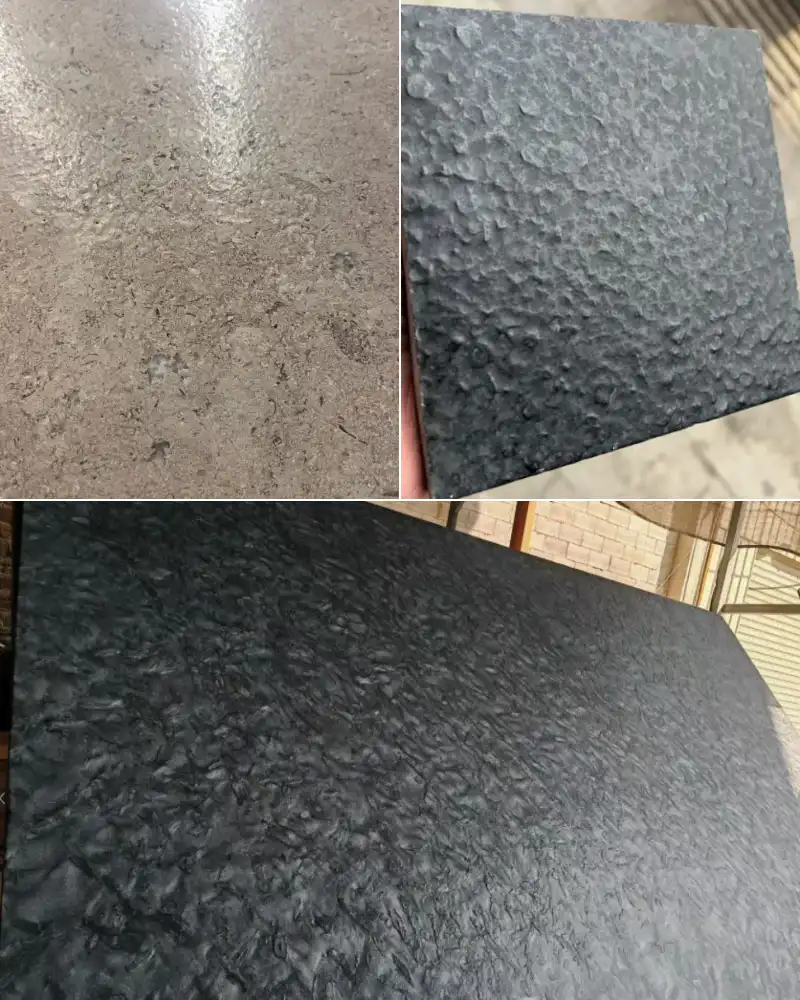
Leather
Stone leather finish is a high-end antique-style finish formed by fine physical grinding of stone using a grinding brush. It successfully integrates the soft texture of leather into the hard stone, not only enhancing the decorative taste of the space but also providing multiple advantages such as anti-slip, stain resistance, durability, and environmental friendliness. This process is particularly suitable for modern architectural design projects that pursue unique aesthetics and high performance.
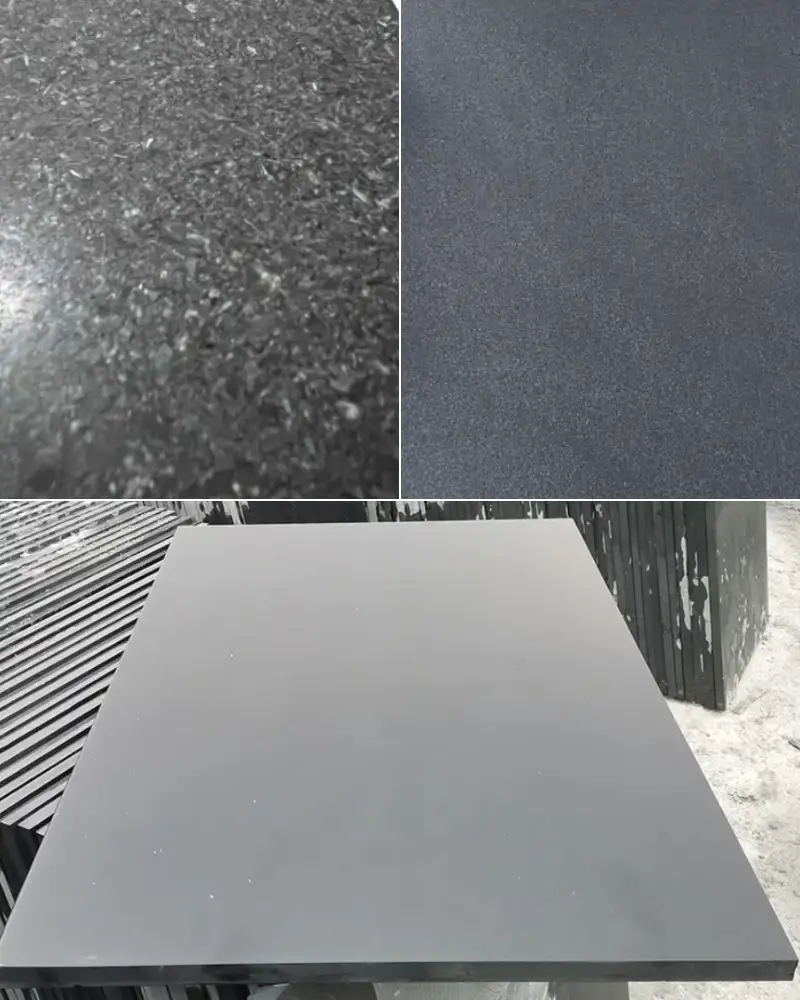
Honed
Stone honed is a mature and practical technology. By controlling the degree of polishing and employing advanced glazing techniques, it can preserve the natural texture of the stone while achieving a non-slip, wear-resistant, and light-pollution-free decorative effect. It has a wide range of applications, from home decoration to commercial projects. When choosing a stone enamel finish, one should consider the specific environment (such as humidity and foot traffic) and aesthetic preferences, prioritizing products treated with new glazing techniques to ensure long-term quality.
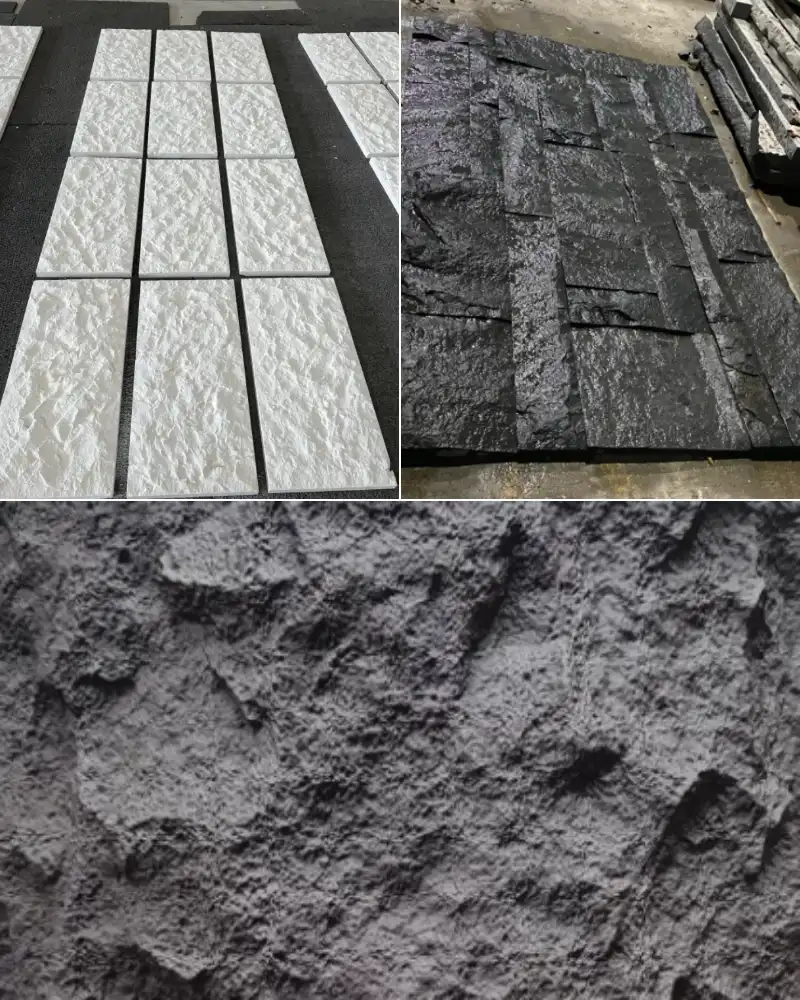
Natural Face
Natural stone finishes are rough surfaces created by artificially mimicking the fracture textures of natural rocks through methods such as splitting, hammering, or grooving. They are primarily suitable for hard stones like granite. Processing techniques are divided into two main categories: quarry splitting and factory processing. Larger sizes often utilize a “grooving and splitting” technique to ensure both quality and yield.
“Natural surface” does not refer exclusively to untreated stone surfaces found in nature; rather, it’s a general term in the market for stone finishes that possess a natural fractured feel and undulating texture. This surface retains the raw, rugged beauty of rock and is widely used in building exteriors, landscape walls, and villa decorations, creating a rustic, wild, yet sophisticated visual effect.
The core of natural stone finishes lies in “mimicking nature.” The “grooving + splitting” technique allows for precise replication of the rugged beauty of nature in the factory, especially crucial for large-sized products to ensure quality; smaller sizes can be efficiently finished using equipment. Granite is the ideal material, while marble, due to its fragility, is generally not recommended for natural surface processing.